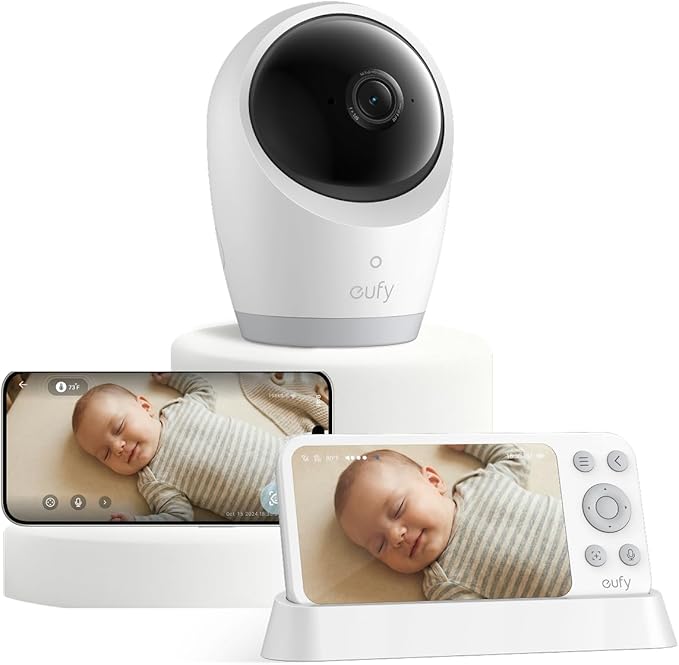
For parents weighing the eufy spaceview pro vs infant optics toddler transition question in 2026, the short answer is this: the Eufy SpaceView Pro is the better pick if your toddler now sleeps in a larger room or a low-profile floor bed, because its 330° pan, 110° tilt and 4x zoom let you sweep an entire 12x14 ft bedroom from a single wall mount, while the Infant Optics DXR-8 Pro is still the smarter choice if you want sharper close-up faces in a smaller nursery and prefer the interchangeable wide-angle lens. Neither is a clear knockout, so the right answer depends on room size, climbing risk and whether your toddler can already reach the cord.
Below we break down how each monitor handles the messy realities of toddler-stage monitoring — climbing, blanket forts, full-room wandering, nightlight glare and the inevitable "I see you, Mommy" wave at the camera — and we line up several strong 2026 alternatives that solve weaknesses in both units.
Why the toddler transition changes what a monitor needs to do
Top Picks
The newborn stage is mostly a static problem: baby is in one spot, you want a tight, well-lit frame of the crib. The toddler transition is a moving problem. A 14-to-30-month-old climbs the rails, kicks blankets off, drags the lovey to the rocking chair, or wakes up at 5:42 a.m. and quietly reads books on the floor where the old over-crib camera angle can’t see them.
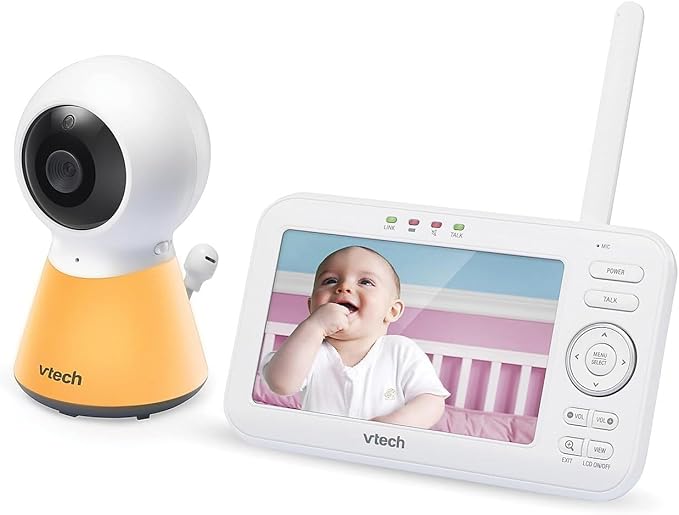
That changes the spec sheet you should care about. Resolution matters less than three things: field of view (can the camera see the whole room, not just the crib?), pan/tilt range and speed (can you scan the floor and door without getting up?), and mount safety (is there a cord a curious toddler can yank?). The eufy spaceview pro vs infant optics toddler transition debate really lives or dies on those three axes.
Eufy SpaceView Pro: strengths for the toddler stage
The SpaceView Pro is a non-Wi-Fi, dedicated-parent-unit monitor with a 5-inch screen and a 720p camera that supports 330° pan and 110° tilt. For a toddler room it has three real advantages:
- Full-room sweep. The 330° pan covers a wall-mounted view of the entire bedroom, including reading corner and door.
- Long battery on the parent unit. Eufy rates it around 30 hours in audio-only mode, which is meaningful at 3 a.m. when you forgot to dock it.
- Range. Up to ~1,000 ft line of sight via FHSS — useful in two-story houses where Wi-Fi cameras get cranky.
Where it stumbles for toddlers: the included wall mount still puts the camera within a determined climber’s reach if you put it over the crib, and the 720p sensor is noticeably grainier than 2K Wi-Fi alternatives at the foot-of-bed distance most toddler beds require.
Infant Optics DXR-8 Pro: strengths for the toddler stage
The Infant Optics DXR-8 Pro is also a closed-system, no-Wi-Fi monitor with a 5-inch screen. Its differentiators for toddlers:
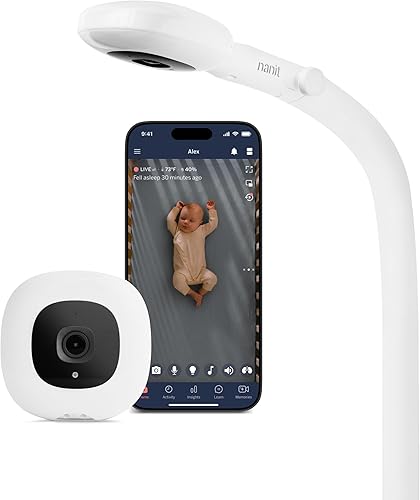
- Interchangeable lens. The included wide-angle lens reframes the shot when your toddler graduates from crib to floor bed without buying a new camera.
- Active Noise Reduction. Cuts hum from white-noise machines so you actually hear the toddler call out, instead of static.
- Sharper close-ups. The 720p sensor with the standard lens still produces a crisper face-on shot than the SpaceView at typical crib distance.
Its toddler-stage weaknesses: the pan range is narrower (about 270°) and tilt is more limited, so a corner-mounted DXR-8 Pro can leave dead zones behind the door or under a loft bed.
Head-to-head comparison
| Feature | Eufy SpaceView Pro | Infant Optics DXR-8 Pro |
|---|---|---|
| Screen size | 5 in | 5 in |
| Resolution | 720p | 720p |
| Pan / tilt | 330° / 110° | ~270° / ~120° |
| Optical zoom | 4x | 2x (with telephoto lens add-on) |
| Interchangeable lens | No | Yes (wide-angle included on Pro) |
| Range (line of sight) | ~1,000 ft | ~700 ft |
| Parent-unit battery | ~12 hr video / ~30 hr audio | ~10 hr |
| Wi-Fi / app | No | No |
| Best for | Larger toddler rooms, floor beds, two-story homes | Smaller nurseries, white-noise-heavy setups, parents who plan to switch lenses |
Which one actually wins the eufy spaceview pro vs infant optics toddler transition test?
If we forced a verdict for the average 2026 toddler room (roughly 11x12 ft, white-noise machine, low convertible bed or floor bed), the SpaceView Pro edges out the DXR-8 Pro because the wider pan range lets one wall mount cover crib, reading nook and door without repositioning. If your child is still in a crib in a small bedroom and you run a loud white-noise machine, the DXR-8 Pro wins on audio clarity and lens flexibility.
2026 alternatives worth considering instead
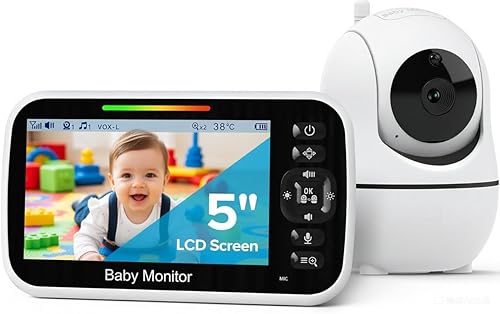
Neither monitor is perfect for every toddler setup. If the SpaceView vs Infant Optics debate is leaving you cold, here are the strongest alternatives we’d compare them against this year.
Nanit Pro Smart Baby Monitor — best for toddler sleep data and an over-bed view
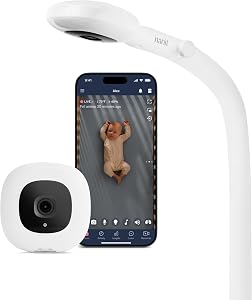
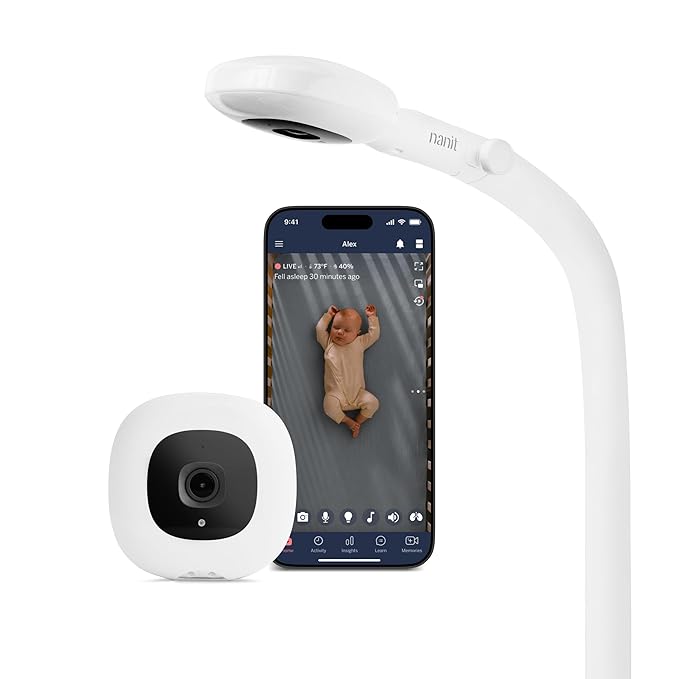
If you liked the idea of Insights data when your child was a newborn and want it to keep working into toddlerhood, the Nanit Pro is the clear pick. Its overhead, ceiling-or-floor-stand mount keeps the camera completely out of climbing reach, which solves the single biggest safety failure of pan/tilt monitors in toddler rooms. The 1080p sensor and night-vision quality also age much better than 720p when your toddler is now further from the lens. Check the Nanit Pro on Amazon.
Owlet Dream Duo (Gen 3) — best if you still want sleep/vitals tracking past 12 months
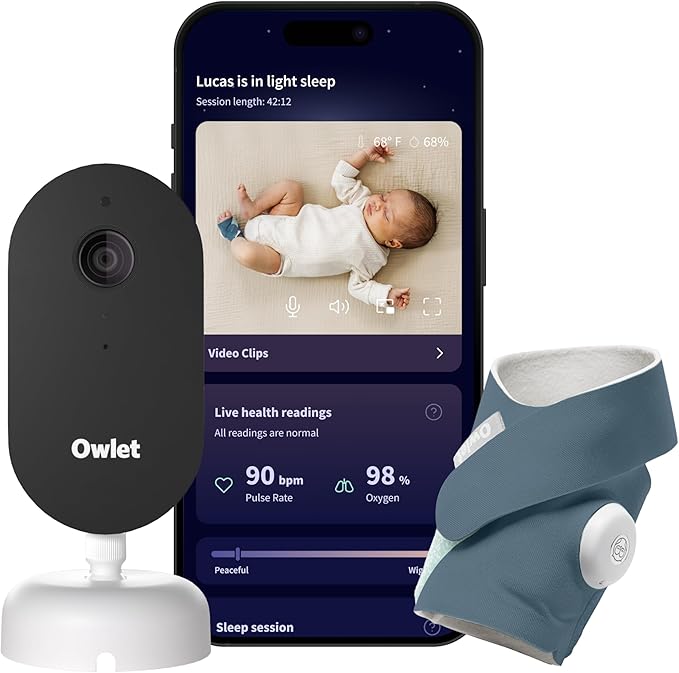
Many parents drop the Owlet Sock at 12 months, but the Dream Duo bundle pairs a 2K camera with the sock so you can keep the camera into the toddler years even after retiring the sock. The 2K HD video gives you a sharper image at floor-bed distance than either 720p contender, which matters once your toddler is six feet from the camera instead of two feet. Check the Owlet Dream Duo on Amazon.
HelloBaby No-WiFi PTZ Monitor — best budget Eufy SpaceView alternative
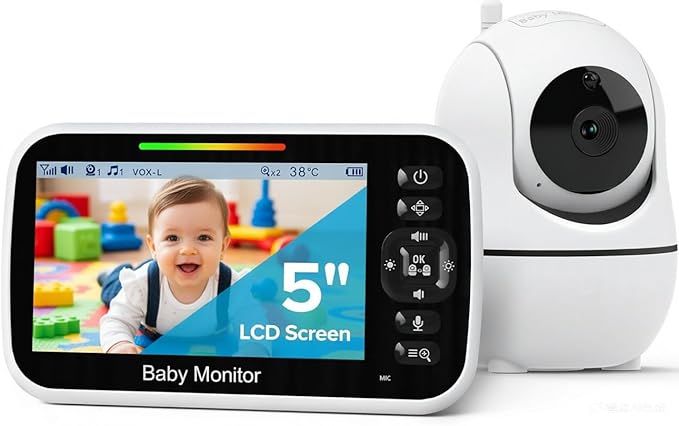
If the SpaceView Pro appealed because of the closed-system, no-Wi-Fi privacy posture, but the price tag did not, the HelloBaby No-Wi-Fi 5-inch is the budget answer. It has full pan-tilt-zoom, the same 5-inch screen format and an honest 30-hour battery rating on the parent unit. It is not as sharp as the Eufy at zoom, but for a toddler in a normal-sized bedroom it is genuinely close. Check the HelloBaby PTZ on Amazon.
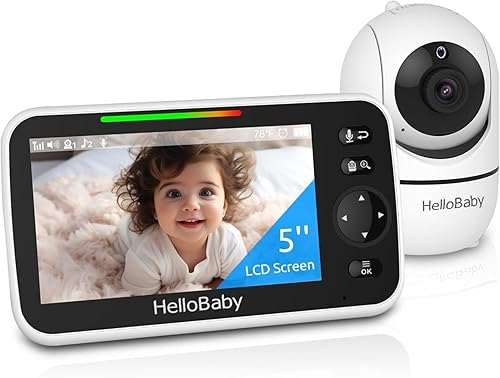
HelloBaby 5-inch with 2 Cameras — best for siblings sharing or two-room transitions
The toddler transition often coincides with a new baby moving into the old nursery. A two-camera kit lets you keep eyes on both rooms from one parent unit, with split-screen on the 5-inch display. This is also our pick when toddlers transition into a shared room with an older sibling and you want to see both beds. Check the HelloBaby 2-Camera Kit on Amazon.
GoodBaby No-WiFi PTZ Monitor — best ultra-budget pick
If you just need a reliable, hack-proof video monitor to bridge the next 18 months before your child stops needing one at all, the GoodBaby No-WiFi PTZ is the cheapest sensible option in 2026. Pan, tilt, two-way talk and a multi-day battery; no app, no cloud, no monthly fee. It is the right answer for grandparents’ houses and weekend rentals too. Check the GoodBaby Monitor on Amazon.
Setup tips for the toddler stage (either monitor)
- Wall-mount, do not shelf-mount. Toddlers will pull anything cord-related off a shelf. Run the power cord inside a cable raceway and screw the mount into a stud.
- Aim slightly downward, not straight at the crib. A 15–20° downward angle gives you both the bed and the floor, which is where the action moves in year two.
- Disable the camera’s status LED if possible. A blinking light is the single most common reason toddlers stand up at 3 a.m. and start talking to the camera.
- Test the 5 a.m. low-light scene. Both monitors look great at midnight, but a thin band of sunrise through the blackout curtain can blow out the IR exposure. Calibrate during real conditions, not store-display conditions.
For more on toddler-room monitor setup and tradeoffs, see our guides on the best baby monitors for floor beds in 2026, the non-Wi-Fi baby monitor buyer’s guide, and baby monitor mounting safety.
Frequently Asked Questions
Is the Eufy SpaceView Pro safe for a toddler who climbs?
Only if you wall-mount it high — above 6 feet — and run the power cable inside a hard raceway. The unit itself is light, so a determined climber can pull it down by the cord. The SpaceView is no riskier than any other camera-on-tripod setup, but treat the cord as the hazard, not the camera body.
Can I keep using the Infant Optics DXR-8 Pro after my toddler moves to a big-kid bed?
Yes, and the wide-angle lens that ships with the Pro is specifically designed for that transition. Swap to the wide-angle lens, re-mount the camera 6–7 feet up on the wall opposite the bed, and you will get the full floor of a standard 10x12 ft bedroom in frame.
Which has better night vision for a dark toddler room — SpaceView Pro or DXR-8 Pro?
The SpaceView Pro’s IR throw is slightly stronger and reaches further, which matters in a larger room. At under 8 feet of distance, the DXR-8 Pro is sharper because of less IR overexposure. Measure your bed-to-camera distance before deciding.
Do either of these monitors work with a white-noise machine without distortion?
The Infant Optics DXR-8 Pro’s Active Noise Reduction handles white-noise hum better than the SpaceView Pro by a clear margin. If your toddler sleeps with a Hatch or similar at moderate volume, the DXR-8 Pro will give you cleaner audio cues for crying or talking.
Should I switch to a Wi-Fi camera like Nanit Pro for the toddler years?
It is a reasonable upgrade. The over-bed mount removes the cord-pulling risk entirely, the 1080p video holds up at toddler-bed distance, and the sleep insights still produce useful data through about age three. If you have Wi-Fi privacy concerns or live somewhere with flaky internet, stick with a closed-system monitor instead.
How long can I expect to use a video monitor in the toddler stage?
Most families retire the video monitor between 30 and 42 months, often switching to an audio-only or app-based alert system for nighttime wakes. If you bought either the SpaceView Pro or DXR-8 Pro for the newborn stage, you will get roughly two more years of use out of it before the toddler outgrows the need for visual monitoring entirely.
Is a two-camera monitor worth it during the toddler transition?
Yes if you are also welcoming a baby into the old nursery, or if your toddler now wanders to a playroom in the early morning. A two-camera kit like the HelloBaby 5-inch 2-Camera version lets one parent unit cover both spaces, which is meaningfully easier than juggling two single-camera systems.
Key Takeaways
- Choosing the right eufy spaceview pro vs infant optics toddler transition means matching capacity and output ports to your actual devices
- Always check actual watt-hours (Wh), not just watts — runtime depends on Wh, not peak output
- Also covers: best non wifi monitor through age 4
- Also covers: eufy spaceview pro big kid bed monitoring
- Also covers: infant optics dxr 8 pro toddler bed coverage
- Compare price-per-Wh across models to find the best value for your budget