Bringing a ventilator-dependent infant home is one of the hardest transitions a family will ever make. The right baby monitor for vent dependent infants at home does not replace prescribed medical equipment — the pulse oximeter, apnea monitor, ventilator alarms, and home-care nursing your discharge team set up — but it supplements them with reliable line-of-sight to your baby's color, chest rise, ventilator circuit position, and trach site between bedside checks. For 2026, the best picks offer crisp video, dependable audio, multi-room or split-screen views (so you can watch the crib while you mix feeds, sterilize suction catheters, or change a trach tie), and minimal lag. Below are the monitors trach/vent families and home-care nurses most often recommend, plus what to skip.
A critical safety note before you shop
Top Picks
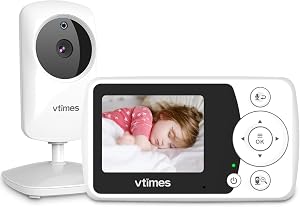
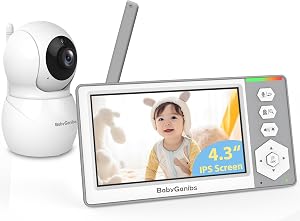
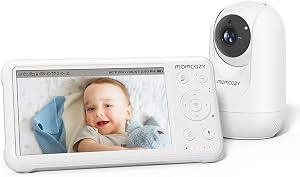
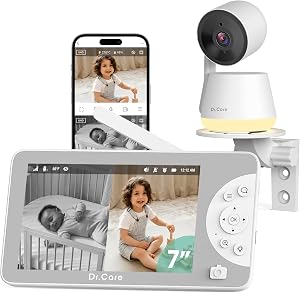
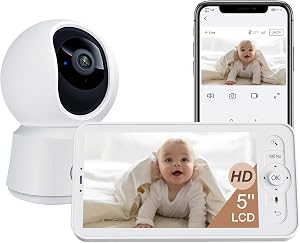
No consumer baby monitor sold on Amazon — including the wearable wellness models — is an FDA-cleared medical device, and none should ever replace the apnea monitor, pulse oximeter, ventilator, or other equipment prescribed at discharge. Your respiratory therapist (RT), pulmonologist, and durable medical equipment (DME) provider configure those alarms based on your baby's individual parameters. A consumer camera-and-audio monitor is a second pair of eyes: it lets you see the chest rise when the vent alarm has not yet triggered, hear secretions building before they cause a desat, or check that a curious toddler sibling has not climbed into the crib. Treat it that way and the right monitor becomes invaluable; treat it as a medical device and it will let you down.
What to look for in a baby monitor for vent dependent infants at home
Vent and trach families have a different priority list than typical newborn parents. After interviewing home-health RNs and reading hundreds of NICU-graduate parent reviews, these are the features that matter most:
- Low video latency. A two- to three-second delay is fine for a sleeping toddler; it is unacceptable when you are watching for circuit disconnects. Local-RF (non-WiFi) monitors typically show the crib in real time; cloud-based WiFi cameras can lag.
- Excellent low-light and night vision. You will check the baby dozens of times overnight without flipping a light on. Look for true infrared (IR) night vision with sharp contrast, not a washed-out gray blur.
- Continuous audio with adjustable sensitivity. Suction-needed wet breathing, vent alarms, and circuit leaks all sound different. You want to hear them clearly, not just see a sound-activated indicator bar.
- Multi-camera or PTZ (pan-tilt-zoom). Many vent-dependent babies sleep in a hospital bed in the living room rather than a nursery, with supplies on a separate cart. A PTZ camera lets you sweep from the trach collar to the pulse-ox display to the vent screen. A two-camera system lets you watch both the baby and a sibling's room.
- Backup power and offline operation. If your home loses WiFi or power, a battery-backed local monitor keeps working. This matters disproportionately for medically complex kids.
- Parent-unit monitor (not phone-only). Phones die, get silenced, or get a call right when you need to see the baby. A dedicated handheld screen is more reliable for high-acuity overnight care.
2026 comparison at a glance
| Monitor | Video | WiFi required? | Standout for vent families | Best for |
|---|---|---|---|---|
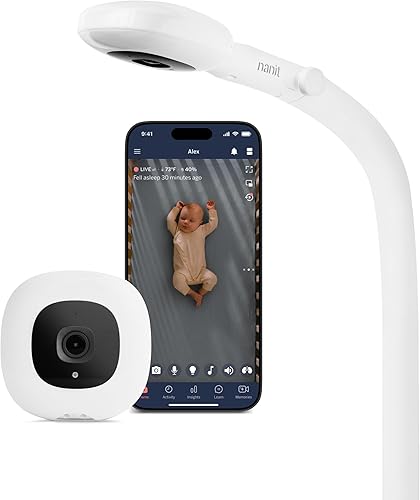
| Nanit Pro | 1080p HD | Yes | Breathing-motion visualization & sleep analytics | Tech-comfortable parents wanting data trends |
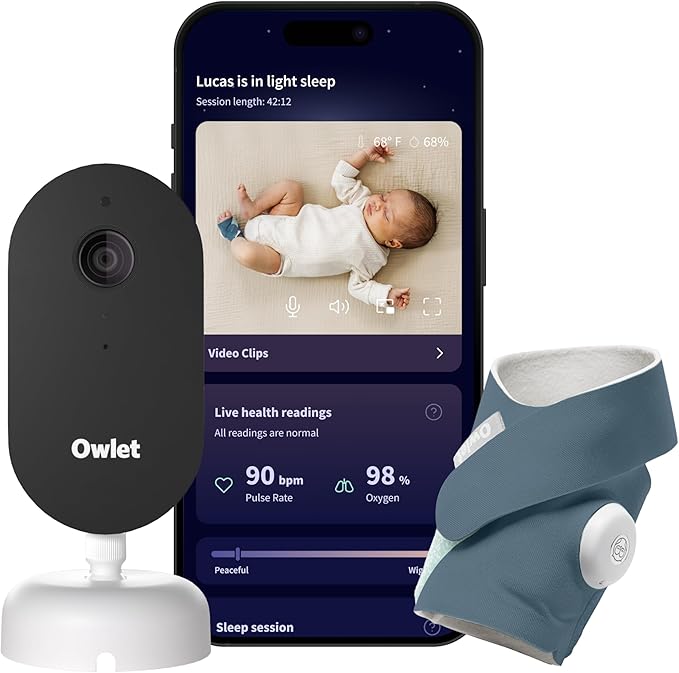
| Owlet Dream Duo (Gen 3) | 2K HD | Yes | Sock tracks HR & oxygen as a wellness layer | Families wanting an extra wellness signal |
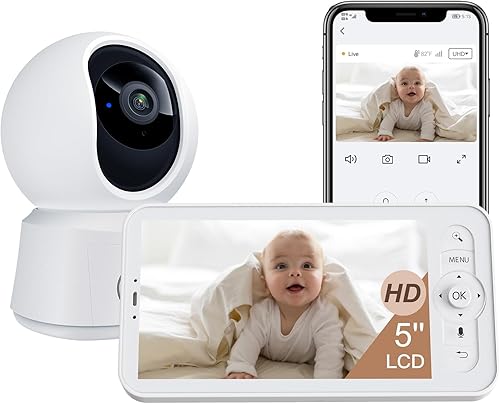
| HelloBaby No-WiFi 5" PTZ | 720p | No | 30-hour battery, real-time RF, no cloud | Reliability-first overnight care |
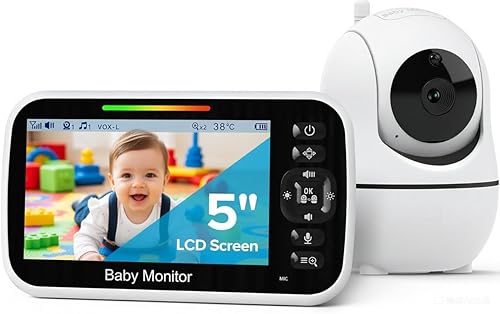
| HelloBaby 2-Camera 5" | 720p | No | Split-screen for crib + supply cart or sibling | Multi-room or multi-child setups |
| GoodBaby PTZ No-WiFi | 720p | No | Wide pan/tilt to sweep vent, pulse-ox, and crib | Hospital-bed-in-living-room layouts |
Top picks for 2026
1. HelloBaby No-WiFi 5-inch PTZ — most reliable overnight
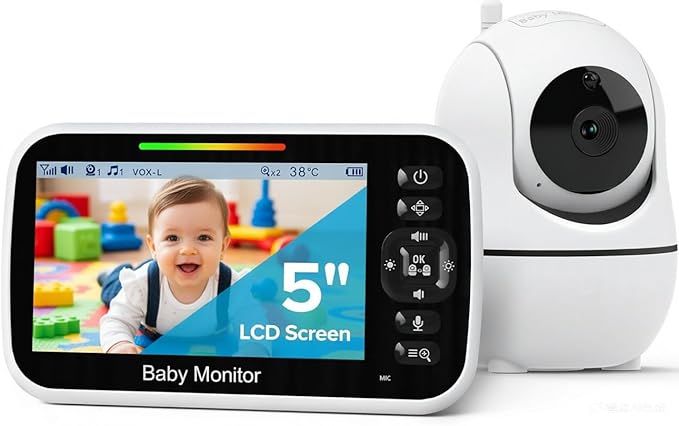
For overnight vigilance in a home where a ventilator alarm cannot share airwaves with a flaky router, this is the monitor we recommend first. The 5-inch parent unit has a 30-hour battery, dedicated radio link, true PTZ control, and audio that picks up wet breathing well before sound-activated lights ever blink. Because nothing routes through the cloud, there is no buffering and no app to crash at 3 a.m. when you most need eyes on the crib. The 720p video is not as sharp as 2K, but the latency is the lowest in the category, which matters more when you are watching chest rise against a vent rate. Check the HelloBaby No-WiFi 5-inch PTZ on Amazon.
2. HelloBaby 2-Camera Bundle — best for hospital-bed-in-living-room layouts
Many vent-dependent infants sleep in a medical bed in a family room with supplies on a cart a few feet away, or with a sibling sharing the space. The two-camera HelloBaby bundle lets you point one camera at the baby and the other at the ventilator/pulse-ox display, the supply cart, or a sibling's bed, viewing both in split-screen on the same handheld parent unit. The 30-hour battery and local RF link carry over from the single-camera version, so reliability is unchanged. See the HelloBaby 2-Camera bundle on Amazon.
3. GoodBaby No-WiFi PTZ — widest sweep for medical-equipment layouts
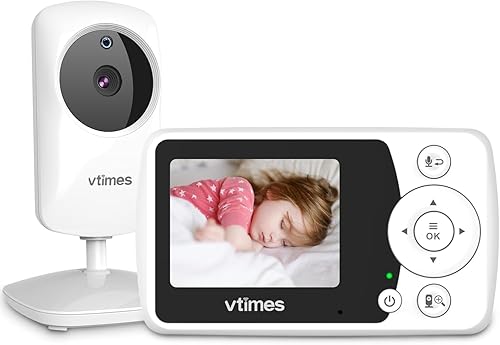
If your home setup looks more like a small step-down unit than a nursery, the GoodBaby PTZ camera has a notably wide pan-and-tilt range, letting you sweep from the trach collar across the vent screen and over to the pulse-ox monitor without getting up. Because it is also a non-WiFi RF design, you avoid the cloud-lag and outage risks. The image is 720p — fine for line-of-sight monitoring, not as polished as the 2K options. View the GoodBaby PTZ monitor on Amazon.
4. Nanit Pro — sharpest video and breathing visualization
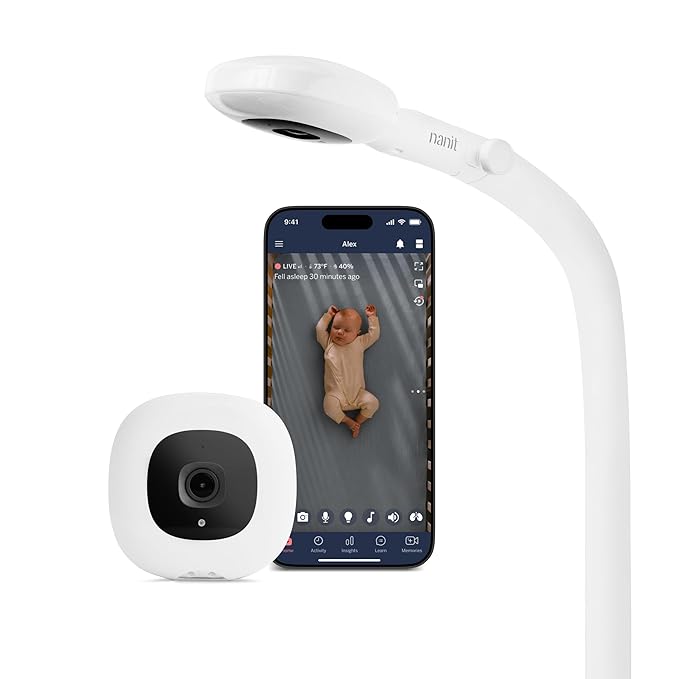
When a home-health RN or grandparent is watching from elsewhere in the house (or from a different state during a parent's brief sleep window), Nanit's 1080p video, breathing-motion visualization, and overhead crib view give the clearest possible look at chest rise and color. It does require WiFi and uses a phone app rather than a dedicated parent unit, so we recommend it as a second monitor layered on top of a no-WiFi unit, not a sole primary. Pair it with the local RF monitor above and you get both reliability and clarity. Check the Nanit Pro on Amazon.
5. Owlet Dream Duo (Gen 3) — extra wellness signal (not a medical alternative)
The Owlet Dream Duo pairs a 2K camera with the Dream Sock, which reports heart-rate and oxygen trends as wellness data. We want to be very clear: this is not a substitute for your prescribed pulse oximeter, and the Owlet team is explicit that it should never be used that way for medically complex infants. For some vent-weaning families it is a useful supplemental layer once medical monitoring is being de-escalated, and the 2K video and app workflow are excellent. Always clear any consumer wearable with your pulmonologist or RT before relying on it. See the Owlet Dream Duo (Gen 3) on Amazon.
How to set up a baby monitor for vent dependent infants at home
Placement matters as much as the device. Position the camera so the lens captures both the baby's chest and face and the visible portion of the vent circuit; if there is a disconnect, you want it visible without panning. Keep the camera cable routed away from suction tubing and oxygen lines, and never inside the crib or hospital bed itself. If you use a no-WiFi monitor, charge the parent unit on a power strip near — but not stacked on — the ventilator. Test the audio at the volume you will sleep with: secretions and a circuit leak should both be audible. Finally, do a power-outage drill: trip the breaker, confirm the parent unit switches to battery, and time how long it lasts.
Many families layer two monitors: a local RF non-WiFi system as the primary, and a WiFi camera (Nanit, Owlet) so a home-health nurse, partner at work, or a grandparent can view from a phone. This redundancy is exactly the philosophy hospital RTs encourage during discharge planning. For more on building a redundant nursery tech stack, see our guides on no-WiFi baby monitors for medically complex infants and multi-camera monitor setups for special-needs nurseries.
Mistakes to avoid
- Treating a wearable as a medical alarm. Owlet, Nanit Breathing Wear, and similar wellness products are explicitly not medical devices for medically fragile infants.
- Relying on a WiFi-only setup. Routers reboot, ISPs go down, and apps update at 2 a.m. A local RF monitor as your primary eliminates that single point of failure.
- Putting the camera too close. Lenses fog in humidified air. Mount 3–5 feet away with a clear view of chest, face, and trach site.
- Forgetting the parent-unit charger when traveling. Pack a redundant charger in your go-bag along with the spare trach kit.
- Skipping a nurse walk-through. Ask your home-health RN to verify the placement and audio sensitivity at the first shift — they have seen what works.
For families also building out a sensory-friendly room or sleep environment, our nursery tech guide for NICU graduates covers humidifiers, white-noise machines that won't mask vent alarms, and lighting options.
Frequently Asked Questions
Can a baby monitor replace a medical apnea monitor or pulse oximeter for a vent-dependent infant?
No. No consumer baby monitor — camera, audio, or wearable — is an FDA-cleared medical device for monitoring a ventilator-dependent infant, and none should replace the prescription equipment your discharge team configured. A consumer monitor is a visual and audio supplement that helps you catch issues between bedside checks and verify what the medical alarms are telling you. Always follow your pulmonologist's instructions on prescribed monitoring.
Is a WiFi baby monitor safe to use for a trach/vent baby if our internet sometimes drops?
It is fine as a secondary layer, but not as your only camera. A WiFi or cloud monitor will go dark during an internet outage, app update, or router reboot. Families with medically complex infants almost universally pair a no-WiFi RF monitor (for guaranteed real-time view) with a WiFi camera (so remote caregivers or off-shift nurses can also watch). Build the redundancy in.
What is the lowest-latency baby monitor for catching ventilator circuit disconnects?
Local RF (non-WiFi) monitors such as the HelloBaby and GoodBaby PTZ units are the lowest latency — typically near-real-time. Cloud-routed WiFi cameras like Nanit and Owlet have measurable delay, sometimes a couple of seconds, which is why we recommend an RF monitor as the primary for vent-dependent infants and a WiFi camera as a supplemental remote-view tool.
Do I need multiple cameras for a baby on a home ventilator?
Often, yes. Many home setups place the baby in a medical bed in a shared family room with the ventilator, humidifier, suction machine, and supply cart spread around the bed. A two-camera bundle or a PTZ camera with a wide sweep helps you keep eyes on the baby's chest and the equipment displays simultaneously without leaving the kitchen or your own bed.
How loud should the parent-unit audio be when sleeping next to a vent-dependent infant?
Loud enough that you can clearly hear wet breathing, alarm tones, and circuit hissing without straining — but not so loud it masks the ventilator's own alarms. Test it at your sleeping volume during the day: ask your partner to lightly tap the camera mic and trigger a low-tone simulation. Many families set the monitor audio to mid-level and rely on the ventilator alarm as the primary auditory cue, with the camera audio as confirmation.
Are wearable monitors like the Owlet Dream Sock useful for vent-weaning babies?
Some families find them useful as a wellness-trend layer once the pulmonary team has begun stepping down medical monitoring, but Owlet itself is explicit that the sock is not a medical device and should not replace prescribed pulse oximetry for medically fragile infants. Always ask your pulmonologist or RT before introducing any consumer wearable, and never silence prescribed alarms in favor of an app notification.
What backup power should a baby monitor have for a vent-dependent infant at home?
Look for a parent unit with at least 12–30 hours of battery life so a power blip does not blind you. The HelloBaby models offer 30 hours, which is among the best in the category. Many families also plug the camera into a small UPS (uninterruptible power supply) along with the humidifier and pulse oximeter so a brief outage does not interrupt monitoring while the home generator or battery backup for the ventilator kicks in.
Key Takeaways
- Choosing the right baby monitor for vent dependent infants at home means matching capacity and output ports to your actual devices
- Always check actual watt-hours (Wh), not just watts — runtime depends on Wh, not peak output
- Also covers: ventilator baby monitor home use
- Also covers: tracheostomy infant monitor
- Also covers: home vent baby camera
- Compare price-per-Wh across models to find the best value for your budget