Choosing the right baby monitor for pierre robin sequence is about more than picking a camera with the highest resolution. Babies with Pierre Robin sequence (PRS) often have micrognathia, glossoptosis, and sometimes cleft palate, which together can cause positional airway obstruction, feeding difficulty, and noisy or labored breathing, especially during sleep. Parents need a monitor that delivers crisp 1080p or 2K video, ultra-sensitive two-way audio, instant sound alerts, and (ideally) breathing-motion or wellness tracking, so subtle changes in chest movement, retractions, or stridor are easier to catch from across the house.
This 2026 buying guide walks through what actually matters for PRS infants, the specific features to prioritize, and the four consumer monitors we think fit the use case best. Importantly, none of these devices are medical equipment and they do not replace a hospital-prescribed apnea monitor, pulse oximeter, or home cardiorespiratory monitor. Always follow your craniofacial team’s and pulmonologist’s guidance first.
Why a Standard Baby Monitor Isn’t Quite Enough for PRS
Top Picks
Pierre Robin sequence babies are often placed in prone or side-lying positions to help the tongue fall forward and keep the airway open — the opposite of typical safe-sleep advice for healthy infants. Because of this, the visual angle, low-light clarity, and audio sensitivity of your monitor become uniquely important. You’re not just watching whether baby is asleep; you’re watching for chest retractions, listening for stridor, and checking that the chin and jaw aren’t tucked into the mattress.
A good baby monitor for pierre robin sequence should help you:
- See clear chest rise and fall, even in the dark
- Hear subtle changes in breathing tone (stridor, snoring, gasping)
- Get fast notifications if sound or motion changes
- Pan/tilt to confirm head and jaw position if baby shifts
- Run reliably overnight without dropouts
Comparison: Top Monitors for PRS Families in 2026
| Monitor | Video | Breathing/Wellness Insights | Connection | Best For |
|---|---|---|---|---|
| Nanit Pro | 1080p HD overhead | Computer-vision breathing motion tracking (with band) | Wi-Fi + app | Parents who want detailed sleep/breathing analytics |
| Owlet Dream Duo (Gen 3) | 2K HD camera | Dream Sock tracks heart rate, oxygen, sleep | Wi-Fi + app | Families wanting wellness-style vitals at a glance |
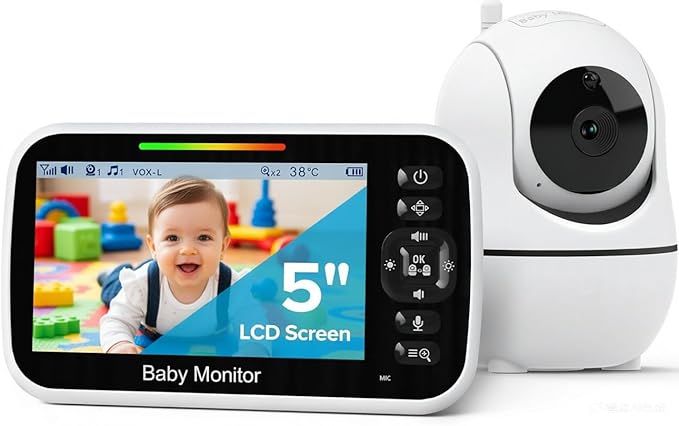
| HelloBaby No-Wi-Fi PTZ | 5" parent display | Sound levels, temperature | FHSS, no Wi-Fi | Hospital stays, NICU step-down, privacy-first families |
| GoodBaby No-Wi-Fi PTZ | Parent display | Sound, temperature, lullabies | FHSS, no Wi-Fi | Budget-friendly secondary monitor for travel/grandparents |
Our Top Picks for a Baby Monitor for Pierre Robin Sequence
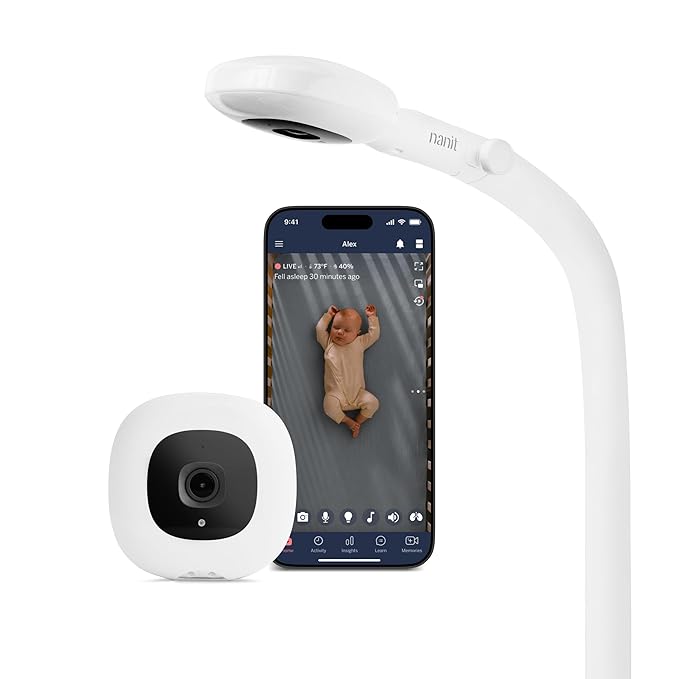
1. Nanit Pro Smart Baby Monitor — Best Overall for Breathing Visibility
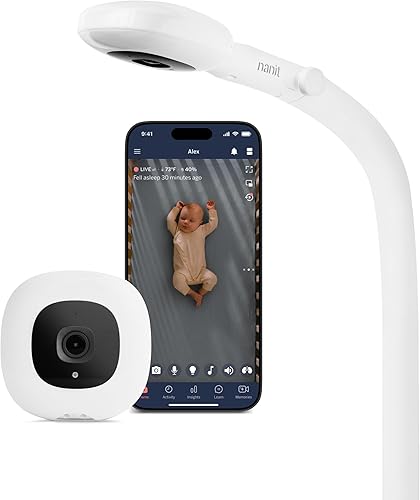
The Nanit Pro’s overhead mounting angle is a quiet superpower for PRS families. Because the 1080p camera looks straight down on the crib, you can clearly see whether baby’s chin is tucked, whether the head has rotated, and whether the chest is rising evenly — something side-angle monitors often miss. Paired with Nanit’s Breathing Wear bands, the app uses computer vision to track breathing motion without any wires or sensors touching the baby, which is a meaningful comfort for infants who may have nasopharyngeal airways, feeding tubes, or cleft palate post-op dressings.
Night vision is genuinely excellent, sound and motion alerts are configurable, and the app keeps a timeline of sleep events so you can correlate concerning sounds with the video clip. The downside is that it requires reliable home Wi-Fi and a subscription unlocks the best insights. View the Nanit Pro on Amazon.
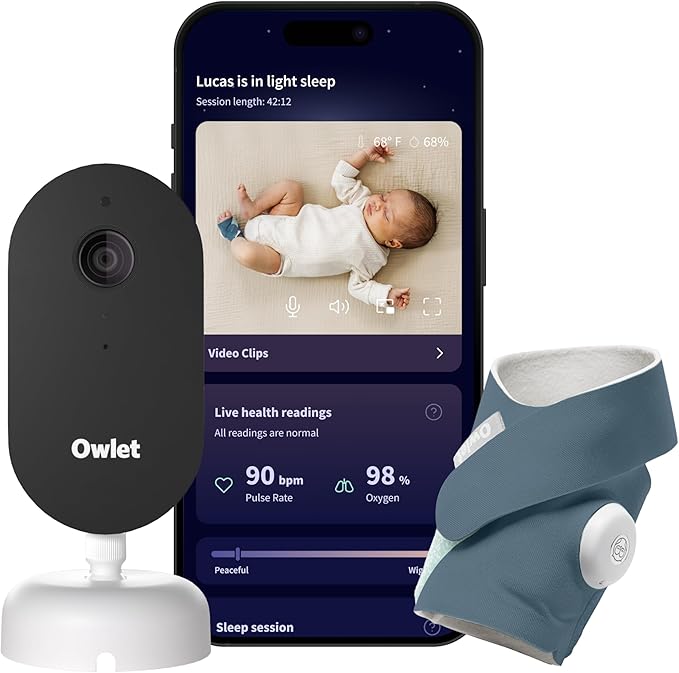
2. Owlet Dream Duo (Gen 3) — Best for Wellness Vitals Alongside Video
For many PRS parents, the biggest fear is silent overnight desaturation — especially in the weeks before mandibular distraction or tongue-lip adhesion. The Owlet Dream Duo pairs a sharp 2K HD camera with the Dream Sock, which estimates heart rate, oxygen levels, and sleep quality. While Owlet is explicitly a wellness product (not a medical apnea monitor), having a second data layer beyond just video and audio can give exhausted parents a more complete picture and a clearer reason to check in person.
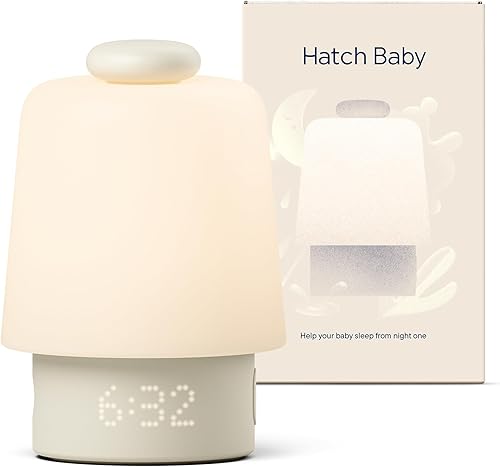
The camera itself is solid — wide angle, strong night vision, and background sound detection. The sock’s sizing means it works from newborn through about 18 months, which covers most of the highest-risk PRS window. Check the Owlet Dream Duo on Amazon.
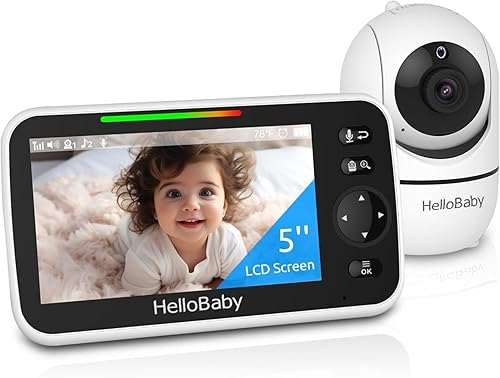
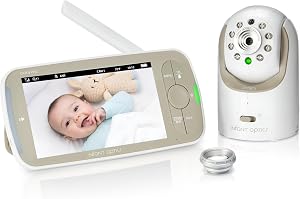
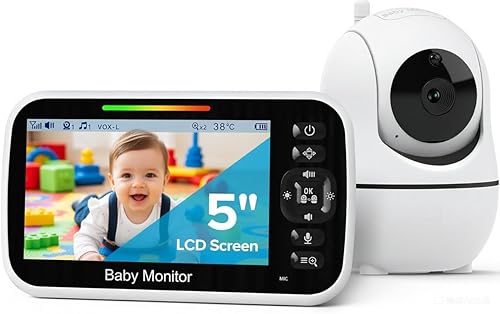
3. HelloBaby No-WiFi 5" Monitor with PTZ — Best for Hospital and Travel Use
PRS families spend more time than most in hospitals — NICU stays, distraction surgery, cleft palate repair, sleep studies. A no-Wi-Fi monitor with a dedicated 5" parent unit and 30-hour battery is invaluable in those environments where guest Wi-Fi is unreliable or off-limits. The HelloBaby model uses encrypted FHSS, so there’s no app, no account, and no cloud — just a private radio link between the camera and screen.
Pan, tilt, and zoom let you reposition the view remotely to confirm baby’s jaw isn’t pressed into bedding, and the sound-activated screen wakes you when the audio level changes. It’s also a great primary monitor for families who don’t want any smart-home dependencies. View the HelloBaby No-WiFi PTZ on Amazon.
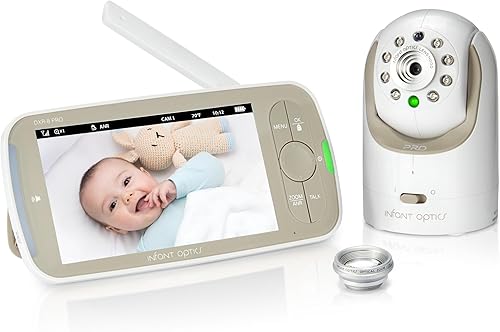
4. GoodBaby No-WiFi PTZ — Best Budget Backup Monitor
Most PRS families end up wanting two monitors: a primary smart camera at home and a simple, reliable backup for grandparents, the car-seat-to-bedroom transition, or the early post-op recovery zone. The GoodBaby PTZ monitor fills that role without breaking the bank. It’s a no-Wi-Fi unit with two-way talk, lullabies, temperature reading, and a sound-level indicator, all on a dedicated parent screen.
You won’t get breathing analytics or vitals here, but the picture is clear, the audio is responsive, and the lack of an app means anyone caring for your baby can use it without a tutorial. See the GoodBaby PTZ monitor on Amazon.
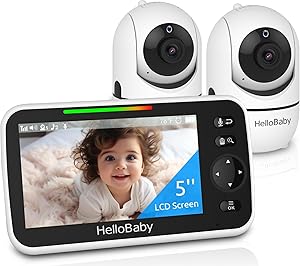
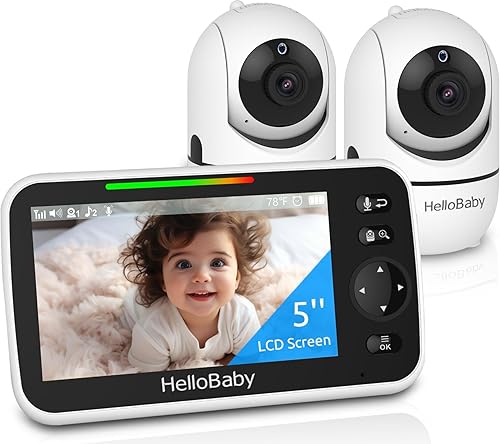
5. HelloBaby 5-inch with Two Cameras — Best for Crib + Recovery-Chair Coverage
After distraction osteogenesis or cleft palate repair, many PRS babies sleep upright in a recovery chair, lounger, or co-room with a parent for several weeks. A two-camera kit lets you cover both the crib and the recovery setup on one parent display, switching automatically or on a schedule. Long battery life means you’re not chasing a charger during 3 a.m. feeds. View the HelloBaby 2-camera kit on Amazon.
Features That Actually Matter for PRS
Audio sensitivity and clarity. Stridor, retracting breaths, and feeding-tube clicks are quiet. You want a monitor with an adjustable sound threshold and a speaker that reproduces high-frequency detail, not just low rumble.
True low-light video. Many PRS babies sleep on their side or prone with the room very dim. Look for monitors that explicitly advertise IR or low-lux performance so you can see chest movement without turning on a light.
Reliable alerts. A delayed push notification is worse than no notification. Wired/dedicated parent units (HelloBaby, GoodBaby) win on latency; Wi-Fi units (Nanit, Owlet) win on richness of data. Many families run one of each.
Pan/tilt/zoom. The ability to remotely zoom in on the chest wall or the jaw line without entering the room is genuinely useful with PRS — every nursery entry risks waking a fragile sleeper.
No false reassurance. Be careful not to treat consumer wellness data as medical truth. If your craniofacial team has prescribed a pulse oximeter or apnea monitor, that device is the source of truth — a consumer monitor is a supplement.
Setting Up Your Monitor for a PRS Infant
Position the camera so you can see the full chest and the side of the face, not just the top of the head. If you use an overhead mount like the Nanit, angle the crib so the jaw line is visible. Keep the room cool (PRS babies can work harder to breathe and overheat more easily) and use the monitor’s temperature alert if available. For a deeper dive into setup, see our guides on monitors for babies with cleft palate and monitors for laryngomalacia, which share many of the same priorities.
Frequently Asked Questions
Is a smart baby monitor safe to use with a Pierre Robin sequence baby?
Yes, consumer monitors are safe to use alongside a PRS care plan, but they are not medical devices. If your team has prescribed a hospital-grade apnea monitor or pulse oximeter, keep using that as the primary safety tool and treat the smart camera as a way to see and hear baby remotely.
Should I choose a Wi-Fi monitor or a no-Wi-Fi monitor for PRS?
Many families use both. A Wi-Fi monitor like the Nanit Pro or Owlet Dream Duo gives you richer data and remote viewing for partners and caregivers. A no-Wi-Fi monitor like HelloBaby or GoodBaby is invaluable for hospital stays, travel, and any time home internet is unreliable.
Can a baby monitor detect airway obstruction or apnea?
No consumer baby monitor can reliably detect airway obstruction or apnea. Devices like the Owlet Dream Sock estimate heart rate and oxygen as wellness indicators only. They can prompt you to check on baby, but diagnostic monitoring requires medical equipment prescribed by your pulmonologist or sleep specialist.
What’s the best monitor angle for a baby with micrognathia?
An overhead or high-angled side view works best. You want to see the chest rising and the chin position, since babies with micrognathia can have their jaw tucked toward the chest in ways that aren’t always obvious from a low-angle camera. The Nanit Pro’s overhead mount is particularly helpful here.
Do I need a breathing band or wearable for my PRS baby?
It’s optional and personal. Some families find wearables like Nanit’s Breathing Wear or the Owlet Dream Sock reassuring, while others find them anxiety-inducing because of occasional false alarms. Talk with your craniofacial team — if baby is already on a prescribed monitor, an extra wearable may add noise without adding safety.
How long will we need a specialty monitor setup?
Most PRS families rely on enhanced monitoring through the highest-risk first 12–18 months, especially around feeding milestones, surgical recovery (mandibular distraction, tongue-lip adhesion, cleft palate repair), and any sleep-study follow-up. After that, many transition to a standard nursery camera. Our toddler special-needs monitor guide covers what comes next.
Can I use the same monitor in the hospital during surgery recovery?
You can use a no-Wi-Fi monitor freely in most hospitals; just check with your nursing team. Wi-Fi monitors may not work on guest networks. A travel-friendly unit like the HelloBaby No-WiFi PTZ is a strong second monitor specifically for these stays.
Are video monitors a replacement for in-room sleeping with a PRS infant?
Not in the early months. Most craniofacial teams recommend room-sharing for PRS infants well past the standard six-month mark. A monitor extends your reach when you step away for a shower or a meal — it doesn’t replace proximity during the highest-risk sleep windows.
Key Takeaways
- Choosing the right baby monitor for pierre robin sequence means matching capacity and output ports to your actual devices
- Always check actual watt-hours (Wh), not just watts — runtime depends on Wh, not peak output
- Also covers: pierre robin baby breathing monitor home
- Also covers: baby monitor for cleft mandible jaw airway
- Also covers: prs baby pulse oximeter home monitor
- Compare price-per-Wh across models to find the best value for your budget