If you're searching for a baby monitor down syndrome pulse oximeter home solution, the short answer in 2026 is the Owlet Dream Duo (Gen 3): it's currently the most accessible consumer device that pairs a wearable pulse-ox sock with a 2K HD video camera, giving parents of babies with Down syndrome a continuous look at oxygen saturation (SpO2) and heart rate alongside live nursery video. Pair it with a robust video-only backup like the Nanit Pro for breathing-motion analytics, and you've covered the two layers most Down syndrome families want at home: respiratory/oxygen awareness and visual reassurance during apnea-prone sleep stretches.
Important medical note: Consumer baby monitors — including those marketed with pulse oximetry — are wellness devices, not FDA-cleared medical monitors. If your pediatric cardiologist, pulmonologist, or neonatologist has prescribed a hospital-grade pulse oximeter (such as a Masimo Rad or Nonin device), that prescription monitor is always the primary tool. The products below are supplementary peace-of-mind tech, not replacements for prescribed equipment.
Why babies with Down syndrome often need extra oxygen monitoring at home
Top Picks
Children with Trisomy 21 have a higher baseline risk of several conditions that affect oxygen saturation: congenital heart defects (AVSD, VSD, ASD), obstructive sleep apnea due to low muscle tone and narrow upper airways, pulmonary hypertension, and an elevated risk of respiratory infections like RSV. The American Academy of Pediatrics health supervision guidelines specifically flag sleep-disordered breathing screening before age 4, and many cardiology teams send families home with a prescription pulse oximeter after cardiac surgery or during the interstage period.
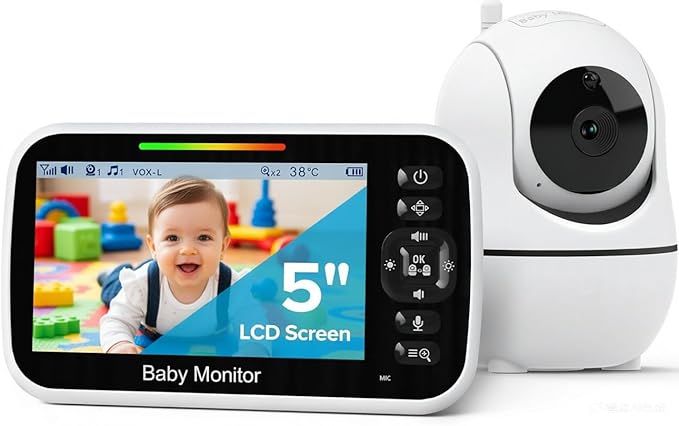
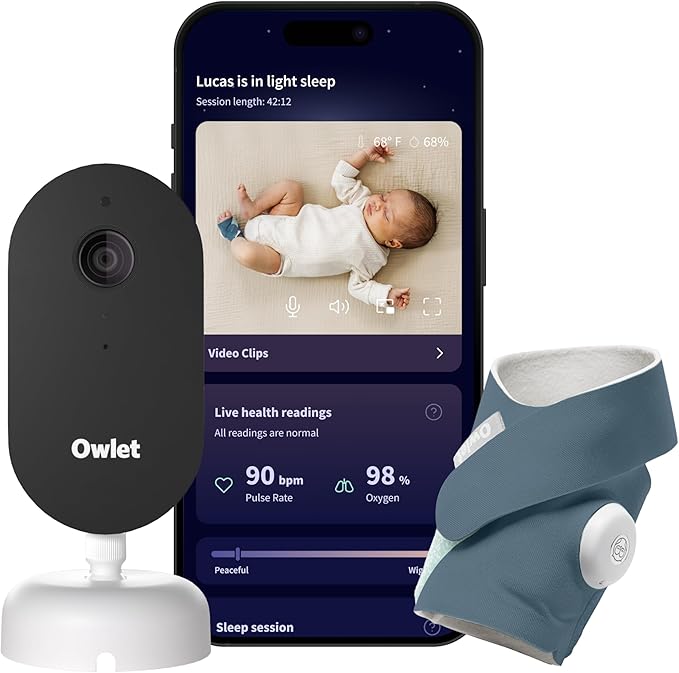
That's where a baby monitor down syndrome pulse oximeter home setup gets practical. Parents often want three overlapping data streams in the nursery: a continuous SpO2/heart-rate trend (clinical or consumer), a live high-resolution video feed they can pull up at 3 a.m., and reliable audio so a quiet cough or stridor doesn't go unheard. No single consumer product perfectly delivers all three to medical-grade standards, so most Down syndrome families build a small stack.
Comparison: top monitors for a Down syndrome nursery in 2026
| Monitor | Tracks SpO2? | Video Quality | Breathing/Motion | Wi-Fi Required | Best Use Case |
|---|---|---|---|---|---|
| Owlet Dream Duo (Gen 3) | Yes (sock, wellness) | 2K HD | Heart rate + SpO2 trends | Yes | Primary SpO2 + video |
| Nanit Pro | No | 1080p HD | Breathing motion (no wearable) | Yes | Video + sleep analytics |
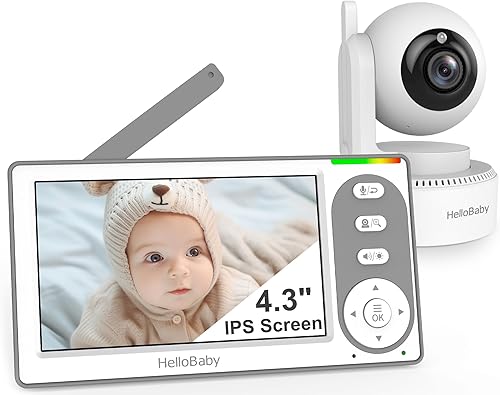
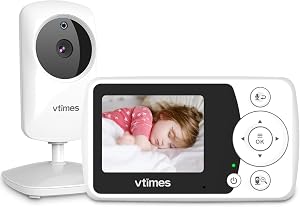
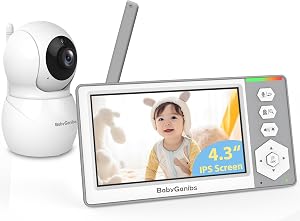
| HelloBaby No-WiFi PTZ | No | 720p, 5" screen | Audio + motion alerts | No | Hospital-grade backup view |
| HelloBaby 2-Camera | No | 720p, dual feed | Audio + temp | No | Crib + therapy-room coverage |
| GoodBaby PTZ | No | 720p | Audio + PTZ | No | Budget secondary angle |
1. Owlet Dream Duo (Gen 3) — the only consumer monitor with built-in pulse oximetry
For families specifically searching for a baby monitor down syndrome pulse oximeter home bundle, the Owlet Dream Duo is the closest off-the-shelf answer. The Gen 3 sock reads pulse oximetry and heart rate from the foot (pulse-ox via reflectance sensors), and the Dream app shows live readings plus overnight trend graphs that you can screenshot and bring to cardiology follow-ups. The 2K HD camera adds wide-angle night vision, two-way audio, room temperature, humidity, and background audio that keeps streaming even when your phone is locked. Parents of Down syndrome babies frequently mention that the trend data — rather than the live alarm — is what helps them spot patterns like dips during REM sleep or after feeds.
Caveats to know before buying: the sock is a wellness device, not a clinical pulse oximeter, so it should never replace a prescribed Masimo or Nonin unit. Sock sizing matters (size 1, 2, 3 — your baby will outgrow them), and Wi-Fi reliability affects alerts. Most cardiology teams are comfortable with families using Owlet alongside prescribed equipment as a second layer.
Check the Owlet Dream Duo (Gen 3) on Amazon
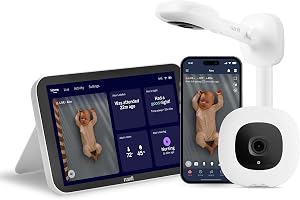
2. Nanit Pro — best video + breathing analytics partner
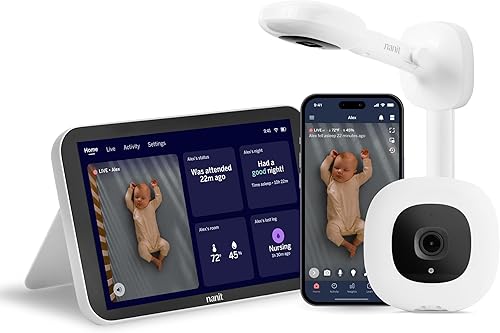
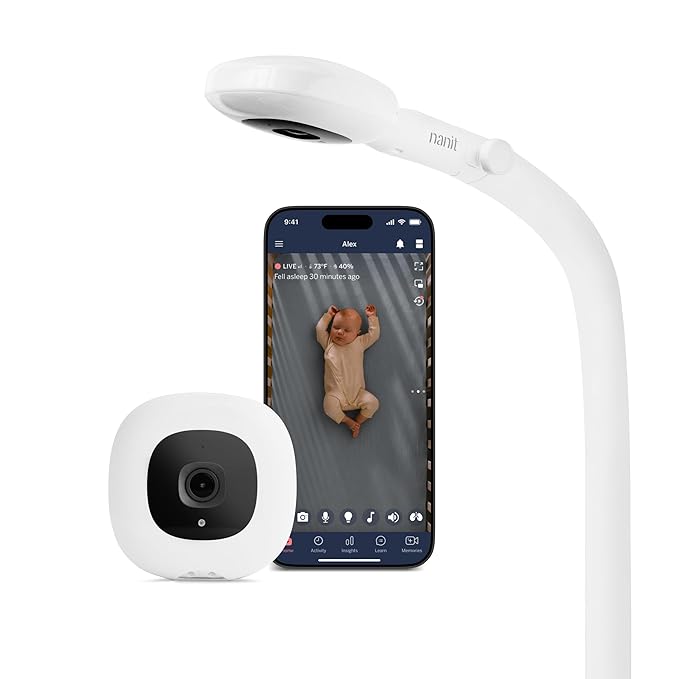
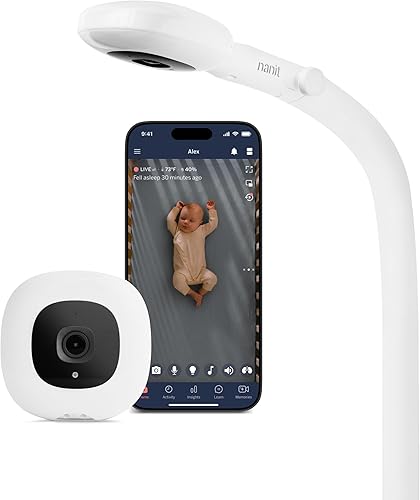
The Nanit Pro doesn't measure SpO2, but it pairs beautifully with the Owlet to round out a Down syndrome nursery. Mounted on the floor stand, the 1080p overhead camera gives a top-down crib view that's ideal for spotting positional changes, reflux events, or seizure-like movements (helpful since infantile spasms have a slightly elevated incidence in T21). With the Breathing Wear band or swaddle, Nanit estimates breaths-per-minute from motion — a non-contact metric that some families prefer when their baby refuses to keep the Owlet sock on. The night vision is the cleanest in this roundup, and the app's sleep history is genuinely useful for therapy and pediatrician appointments.
It is a Wi-Fi-only device with a subscription tier for advanced insights, which is the main drawback for families who want a closed-system monitor.
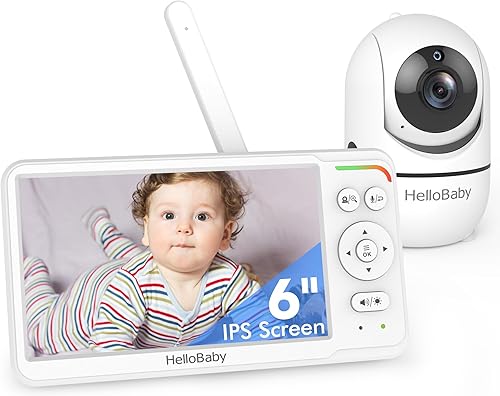
3. HelloBaby No-WiFi 5-inch PTZ — the hospital-bag and power-outage backup
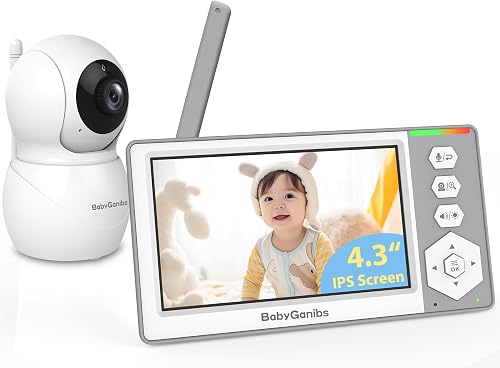
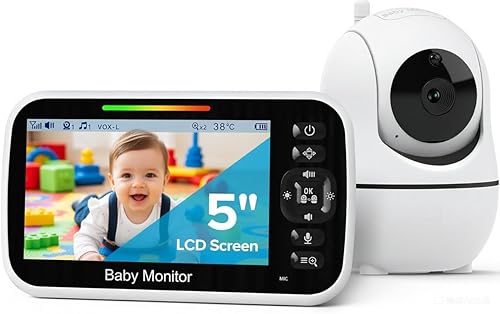
NICU graduates and post-cardiac-surgery babies often come home with a stack of medical equipment, and Wi-Fi outages are not the time to lose eyes on your child. The HelloBaby No-WiFi PTZ runs on a closed FHSS 2.4 GHz signal with a 30-hour battery on the parent unit, pan/tilt/zoom, and no app required. For Down syndrome families who travel for specialist appointments (cardiology, ENT, GI), this is the monitor that lives in the hospital bag because it works in any room without router setup. The 5-inch screen is large enough to see chest rise from across a hotel room.
Check the HelloBaby No-WiFi PTZ on Amazon
4. HelloBaby 5-inch 2-Camera — for therapy room + crib coverage
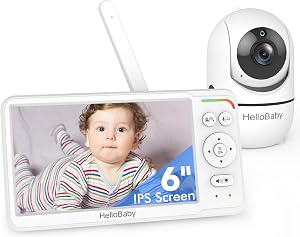
Babies with Down syndrome typically have early intervention happening at home: PT, OT, speech, feeding therapy. The 2-camera HelloBaby system lets you put one feed on the crib and a second in a play/therapy area, toggling between them on one 5-inch parent screen. There's no Wi-Fi, no subscription, and the 30-hour battery means it survives long therapy days without a charger. It won't replace your SpO2 setup, but it's the simplest way to keep visual continuity across two nursery zones.
Check the HelloBaby 2-Camera on Amazon
5. GoodBaby PTZ No-WiFi — budget secondary angle
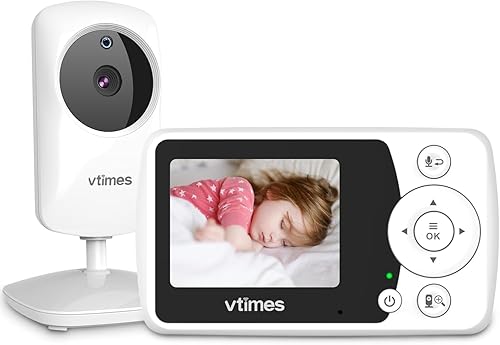
If your Owlet + Nanit stack already handles SpO2 and overhead video, but you want a third inexpensive camera aimed at the changing table or a sibling's bed in a shared room, the GoodBaby PTZ is a sensible add. Pan/tilt/zoom, night vision, two-way talk, and a closed-network signal mean no router dependency. It's not the monitor to lean on for medical context, but it's a useful peripheral.
Check the GoodBaby PTZ on Amazon
How to build a Down syndrome nursery monitoring stack
Most families we hear from end up running a two- or three-device baby monitor down syndrome pulse oximeter home setup:
- Layer 1 — Prescribed pulse ox: Whatever your cardiologist or pulmonologist sent home. This is the medical truth.
- Layer 2 — Consumer SpO2 (Owlet Dream Duo): Trend data and a second alert source. Useful especially after the prescription monitor is weaned.
- Layer 3 — Video (Nanit Pro or HelloBaby): Eyes on chest rise, color, positioning, and seizure-like activity.
- Layer 4 — Offline backup (HelloBaby No-WiFi): Travel, power outages, and Wi-Fi drops.
For more on building out the rest of the room, see our guides on non-Wi-Fi monitors with pulse-ox backup, monitors for NICU graduates at home, and sleep-tracking monitors for special-needs babies.
Frequently Asked Questions
Is the Owlet sock accurate enough for a baby with Down syndrome and a heart defect?
The Owlet Dream Sock is a wellness device — it tracks SpO2 and heart rate trends but is not FDA-cleared as a diagnostic medical monitor. Studies have shown reasonable correlation with hospital pulse oximeters in healthy infants, but accuracy can vary with motion, perfusion, and sock fit. For a baby with a congenital heart defect, follow your cardiology team's guidance: most are comfortable with Owlet as a supplemental layer, not a replacement for the prescribed monitor.
Can I use a regular fingertip pulse oximeter on my baby instead?
Adult fingertip pulse oximeters are not designed for infant fingers or toes and frequently give inaccurate readings due to perfusion and sensor sizing. For spot-checks at home, ask your pediatrician about a Masimo MightySat or a Nonin Onyx infant-compatible probe. For continuous overnight monitoring, a wearable like the Owlet sock or a prescribed clinical unit is more appropriate.
Do I need a Wi-Fi monitor if I'm worried about hacking or signal drops?
No. Closed-signal monitors like the HelloBaby No-WiFi PTZ and the GoodBaby PTZ use FHSS 2.4 GHz and never touch the internet, which sidesteps both hacking concerns and router outages. The trade-off is no app, no remote viewing, and no SpO2 — so many Down syndrome families pair a no-Wi-Fi unit for visuals with an Owlet for oxygen tracking.
What's the best monitor for a Down syndrome baby with obstructive sleep apnea?
If a sleep study has confirmed OSA, the gold standard is whatever your sleep team prescribes (often CPAP with built-in monitoring or a clinical pulse oximeter). At the consumer level, the Owlet Dream Duo's overnight SpO2 trend graphs are useful for spotting desaturation patterns to share with your ENT or pulmonologist, and the Nanit's breathing-motion tracking adds non-contact data.
When can we stop using a pulse oximeter at home for our baby with Down syndrome?
That's a question for your pediatric cardiologist and/or pulmonologist. Weaning typically happens after cardiac repair is healed, pulmonary hypertension is controlled, and overnight SpO2 stays stable. Many families keep a wellness device like the Owlet long after the prescription monitor is returned, simply because the trend data is reassuring during illness.
Does the Nanit really measure breathing without a wearable?
The base camera uses computer vision to detect motion and can flag absence of movement, but accurate breaths-per-minute counting requires the Nanit Breathing Wear band or swaddle, which has a printed pattern the camera tracks. For Down syndrome babies who tolerate the band well, it's a nice non-contact alternative on nights the Owlet sock isn't worn.
What should I tell my pediatrician before relying on a consumer monitor?
Bring the device to a visit and ask: (1) is the alarm threshold appropriate for my baby's baseline SpO2, (2) how should I respond to a low-oxygen alert, and (3) should I cross-check readings against the prescription monitor for a week? Having a documented response plan turns a consumer monitor into a useful tool rather than a 3 a.m. panic source.
Bottom line
For a 2026 baby monitor down syndrome pulse oximeter home setup, start with the Owlet Dream Duo for SpO2 and HD video, layer in a Nanit Pro or HelloBaby for redundant visuals, and keep a no-Wi-Fi unit ready for travel and outages. Always treat consumer devices as a supplement to — not a substitute for — the monitoring your medical team has prescribed.
Key Takeaways
- Choosing the right baby monitor down syndrome pulse oximeter home means matching capacity and output ports to your actual devices
- Always check actual watt-hours (Wh), not just watts — runtime depends on Wh, not peak output
- Also covers: pulse ox monitor for trisomy 21 baby
- Also covers: down syndrome baby overnight oximetry home
- Also covers: baby pulse ox monitor low tone
- Compare price-per-Wh across models to find the best value for your budget